P/N 05Case studyEpoka University, AI course team project
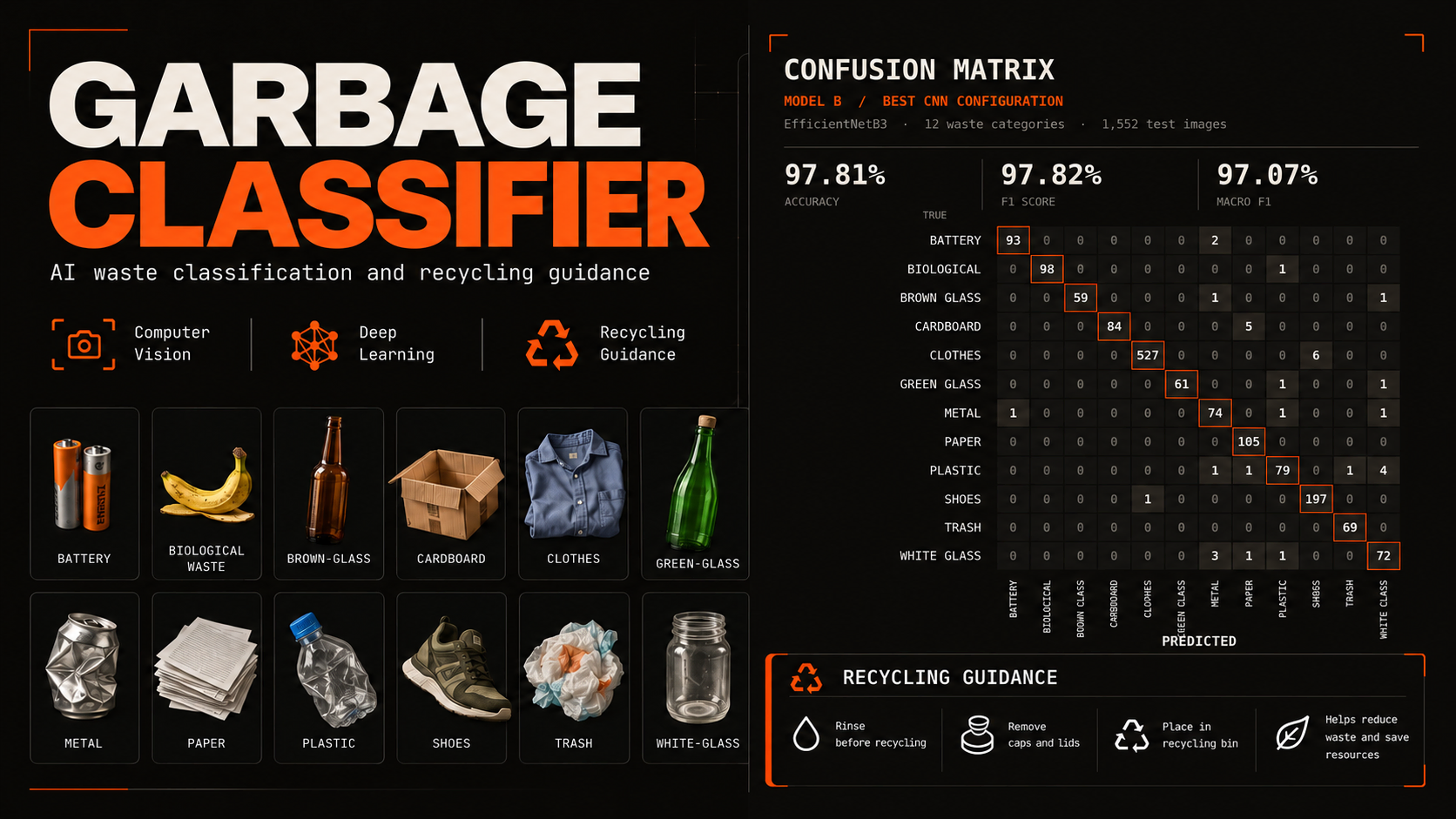
Garbage Classifier — Computer Vision
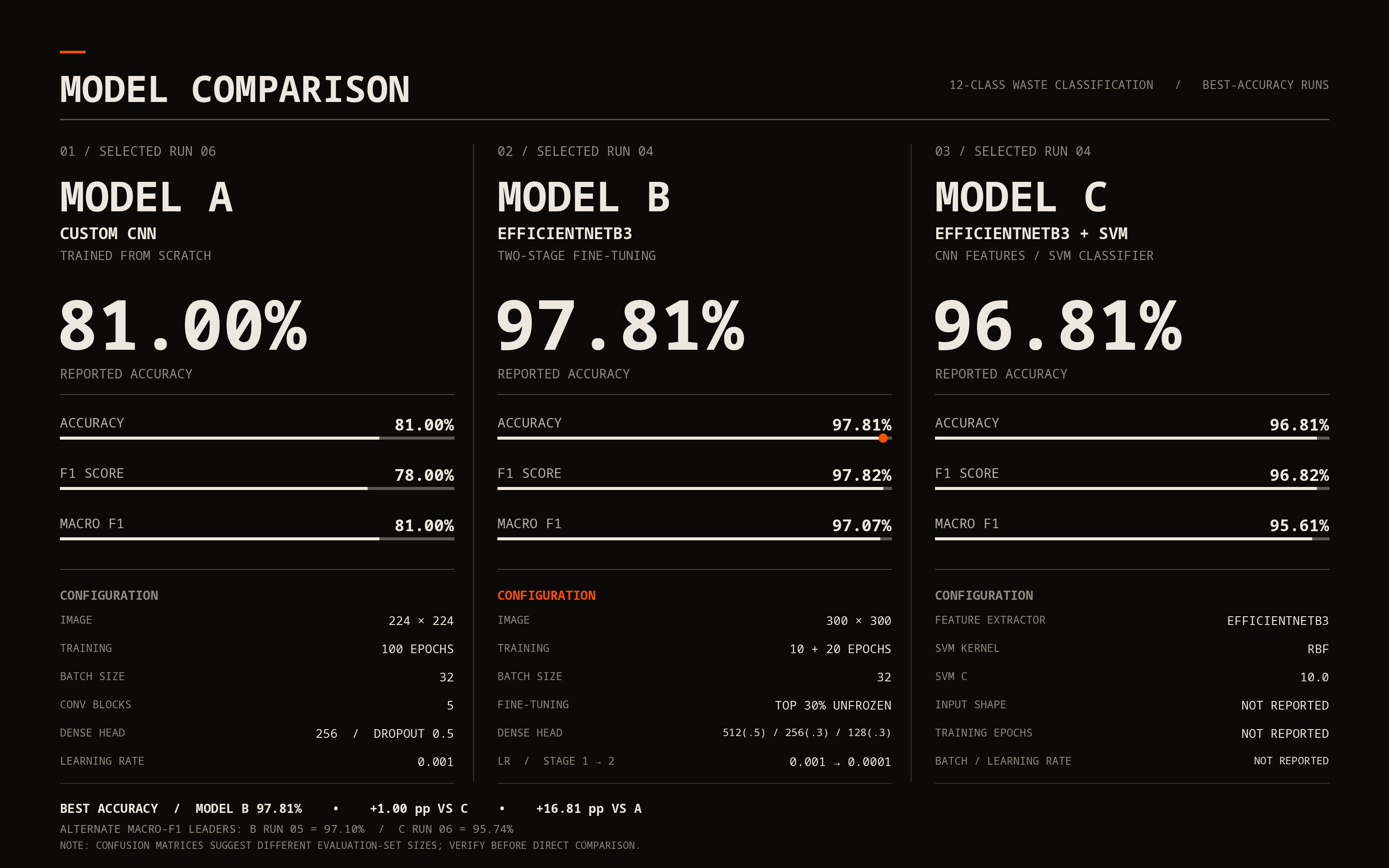
A computer vision model that classifies photos of waste by type. Built in a team for my AI course, my transfer-learning model was selected as the team's final model because it achieved the highest accuracy.
- Role
- Machine learning developer
- Team
- AI course team
- Duration
- One semester
- Year
- 2025
- Stack
- Python · Streamlit · TensorFlow · Transfer learning · Computer vision · Kaggle dataset
Outcomes
- #1
Highest accuracy among the team's candidate models
- ±97%
Test-set accuracy of the final model
Problem
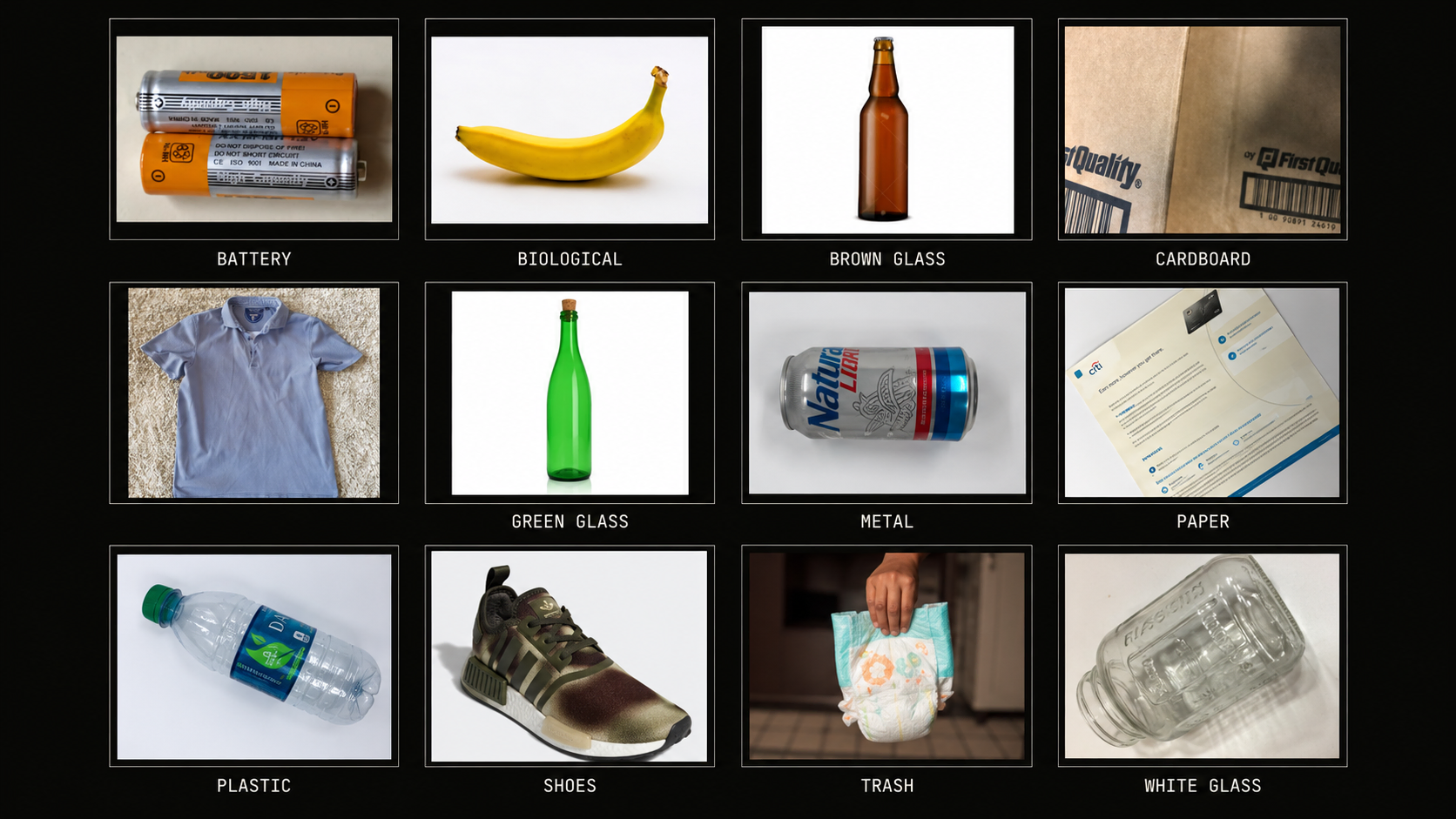
Sorting waste correctly is essential for recycling, yet items often end up in the wrong bin. The project explored whether a neural network could recognize the type of waste from a single photo, a building block for smarter sorting and recycling guidance and tips.
Constraints
An image dataset from Kaggle with uneven image quality, limited computing resources that made training slow, and a constant risk of overfitting on a modest dataset.
Architecture
A Python and TensorFlow pipeline: images are cleaned and preprocessed, then passed to a convolutional network pretrained on a large image collection, with a new classification head trained for the waste categories. Candidate models were compared on held-out data.
5 parts, 4 connections.
- N01 — Kaggle images
- N02 — Cleaning and preprocessing
- N03 — Pretrained CNN
- N04 — New classification head
- N05 — Prediction
- Kaggle images to Cleaning and preprocessing
- Cleaning and preprocessing to Pretrained CNN
- Pretrained CNN to New classification head
- New classification head to Prediction
Key decisions
Transfer learning instead of training a network from scratch. A pretrained backbone reached higher accuracy with far less data and compute, which suited our limited resources.
Cleaning the data before training. Removing or fixing low-quality images meant the model learned from reliable examples.
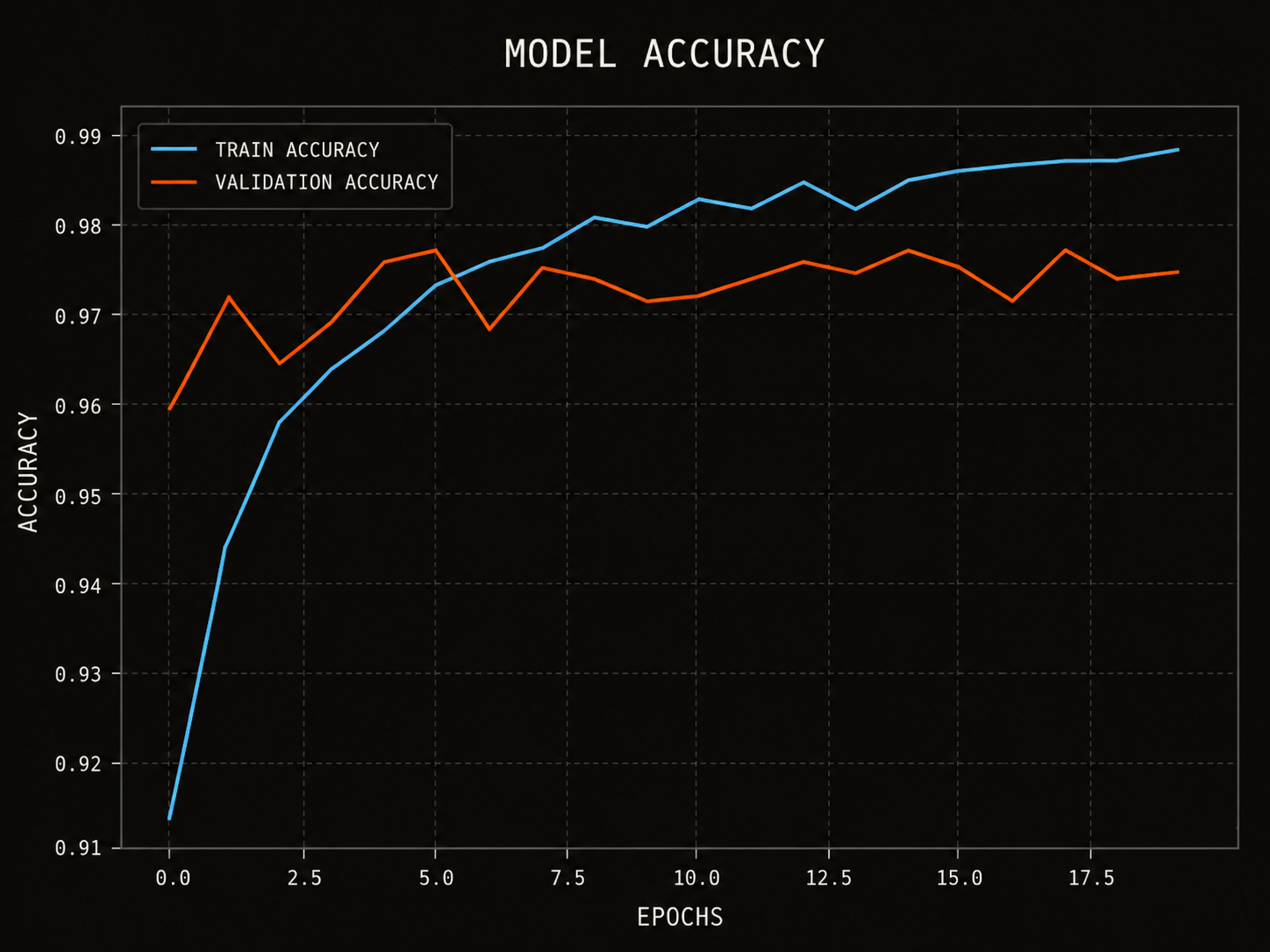
Adjusting the model during training. When validation results showed signs of overfitting, I tuned the training setup rather than simply training longer.
Results
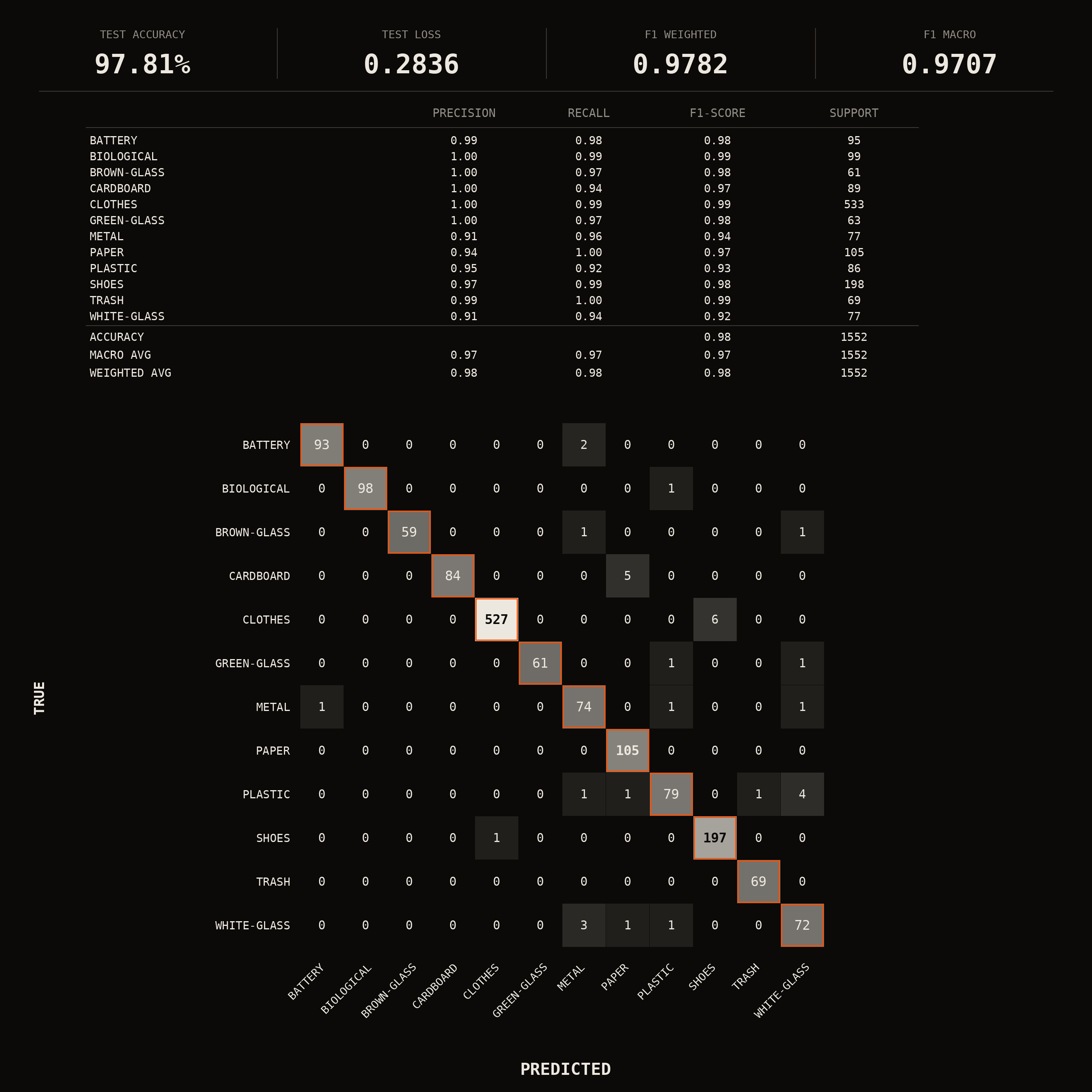
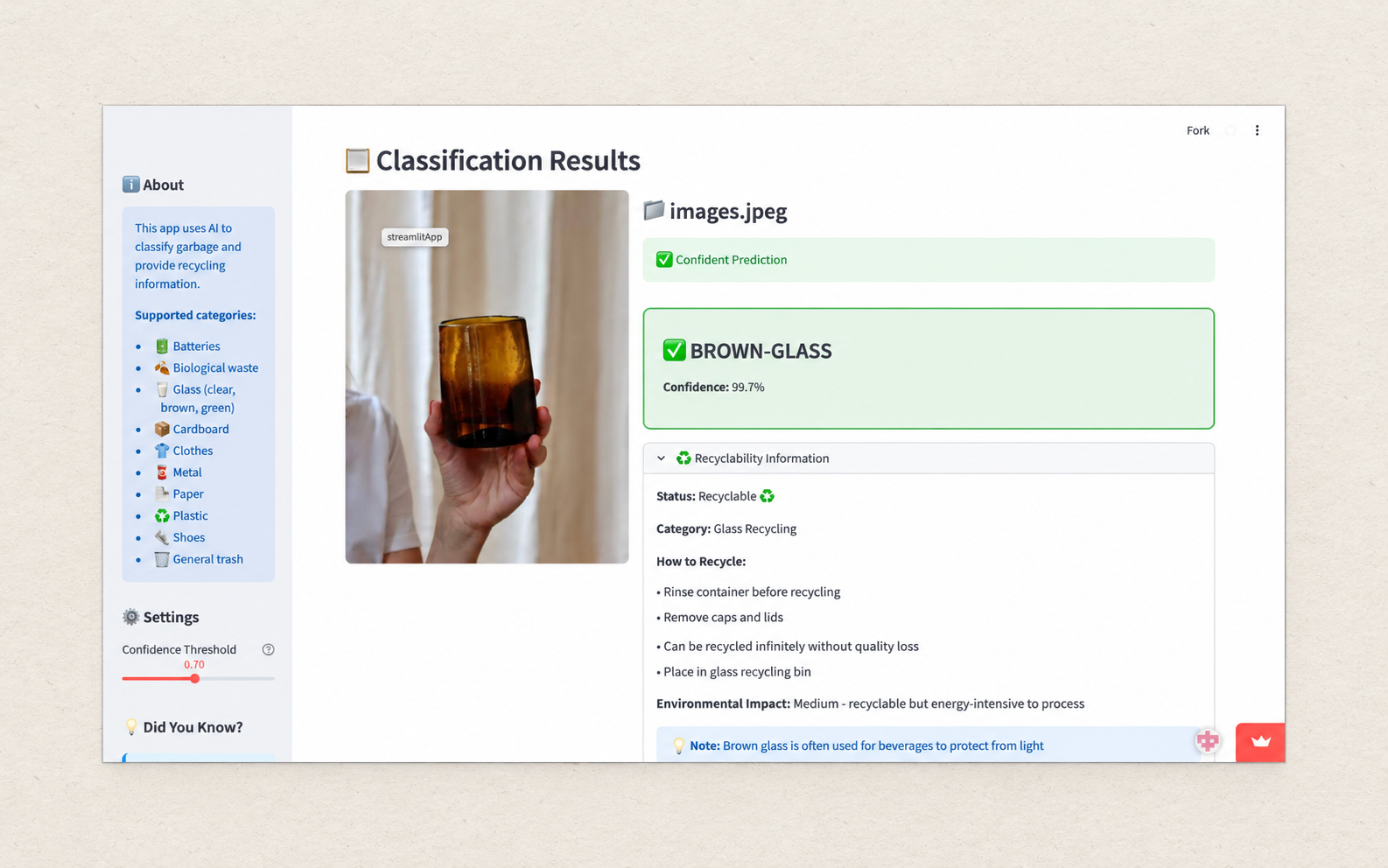
My transfer-learning model achieved the highest accuracy of the team's candidates and was selected as the final model. That model reached ±97% accuracy in test dataset. We created a small web app which is helpful for everyday use, as an AI assistant for helping classifying garbage and acting as an environment-friendly citizen.
Reflection
I would track experiments systematically and report per-class precision and recall, not only overall accuracy. I would keep transfer learning as my default starting point for small image datasets.